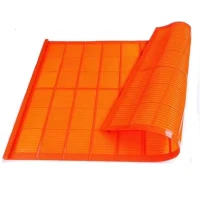
The industry of heavy media coal preparation plant is very special. It has high requirements on the wear resistance and corrosion resistance of many production materials, especially some steel plates used in production. Ordinary steel plates are difficult to suit their working environment. Therefore, bimetal surfacing plate is an indispensable material for these industries. It helps companies add wings and makes them even more powerful.
So, what are the advantages of bimetal surfacing plate? First of all, the bimetal cladding wear-resistant steel plate is prepared by using submerged arc automatic welding technology. The base material is Q235 steel plate with good toughness and weldability. By directly adding ferrochromium, low carbon and other alloy powders, it is mixed in a certain proportion. It is fed into the welding molten pool; the alloy powder melts by absorbing the remaining high-temperature arc heat in the welding molten pool, and quickly condenses to form a chromium carbide wear-resistant surfacing layer.
The surface of the bimetal surfacing plate is smooth and has good formability. The second is its material composition. The strong wear resistance of bimetal surfacing plate is not inherent. It is mainly chromium alloy, and other alloy components such as carbon, molybdenum, niobium, and nickel are also added. The carbides in the phase structure are distributed in a fibrous form, and the fiber direction is perpendicular to the surface, which makes it highly wear-resistant.
The wear-resistant layer of bimetal surfacing plate is mainly composed of chromium alloy, and other alloy components such as manganese, molybdenum, niobium, and nickel are also added. The carbides in the metallographic structure are distributed in a fibrous form, and the fiber direction is perpendicular to the surface. The microhardness of carbide can reach HVl700~2000 or more, and the surface hardness can reach HRc58~62. Alloy carbide has strong stability at high temperatures, maintains high hardness, and also has good oxidation resistance, and can be used normally within 600°C.